SaaS & Web Application Development
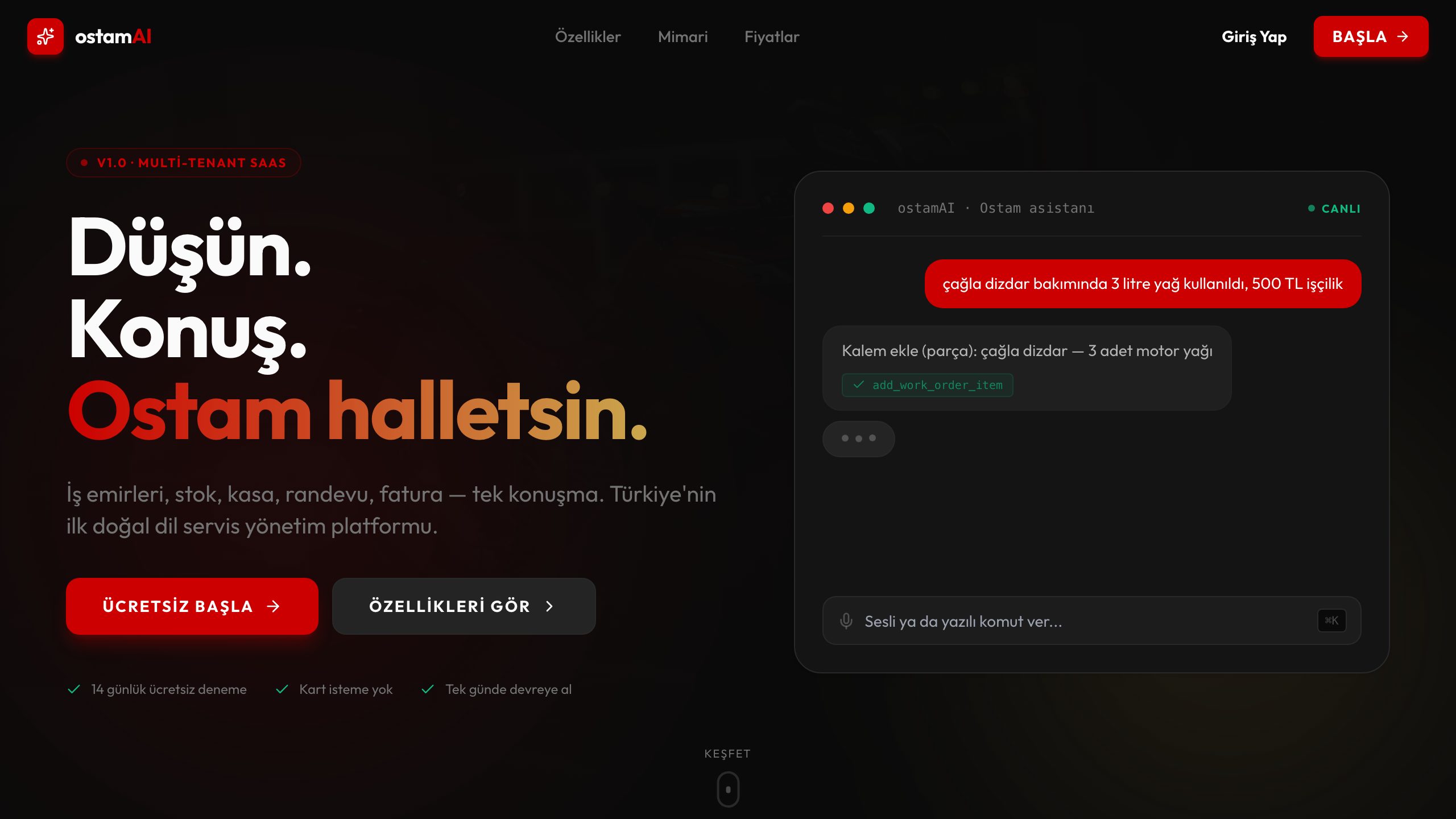
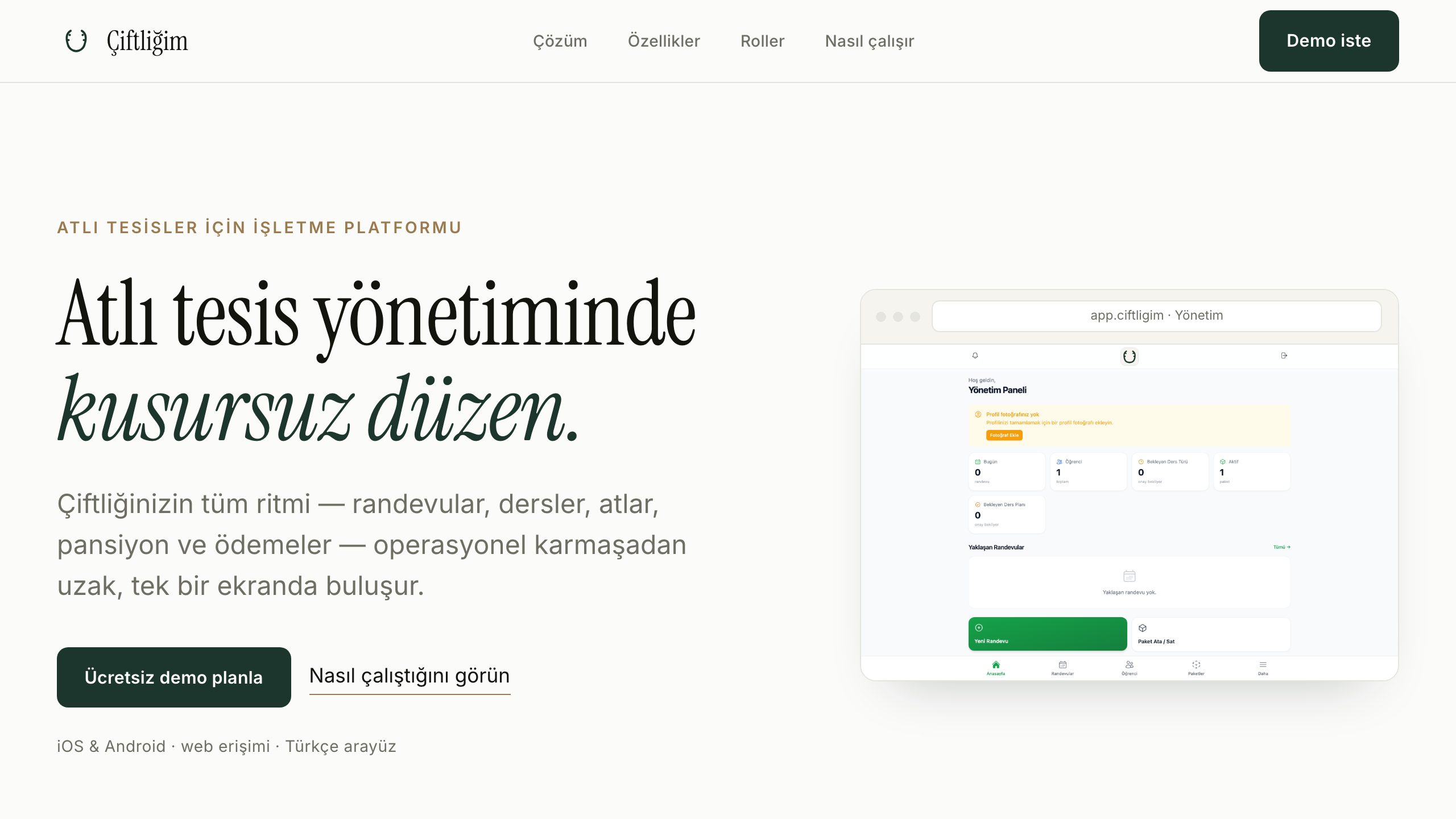
I design and build SaaS products end to end: database schema, API, interface, and production deployment — all in one hand. My own products, like OstamAI and Çiftliğim, run this way in production today. If you have a product idea or an operational problem worth productizing, I can take it from a sketch to a running system.
Who this is for
SaaS development makes sense for two kinds of people. The first is a founder with a product idea who needs a technical partner to build the whole thing — not just a frontend, but the data model, the API, the billing-ready account structure, and the deployment. The second is a business owner who has outgrown spreadsheets and WhatsApp groups and wants their internal chaos turned into a system — sometimes that system later becomes a product sold to others in the same industry. Both of my flagship products started exactly this way: a real operational problem, solved properly, then productized.
What can be built
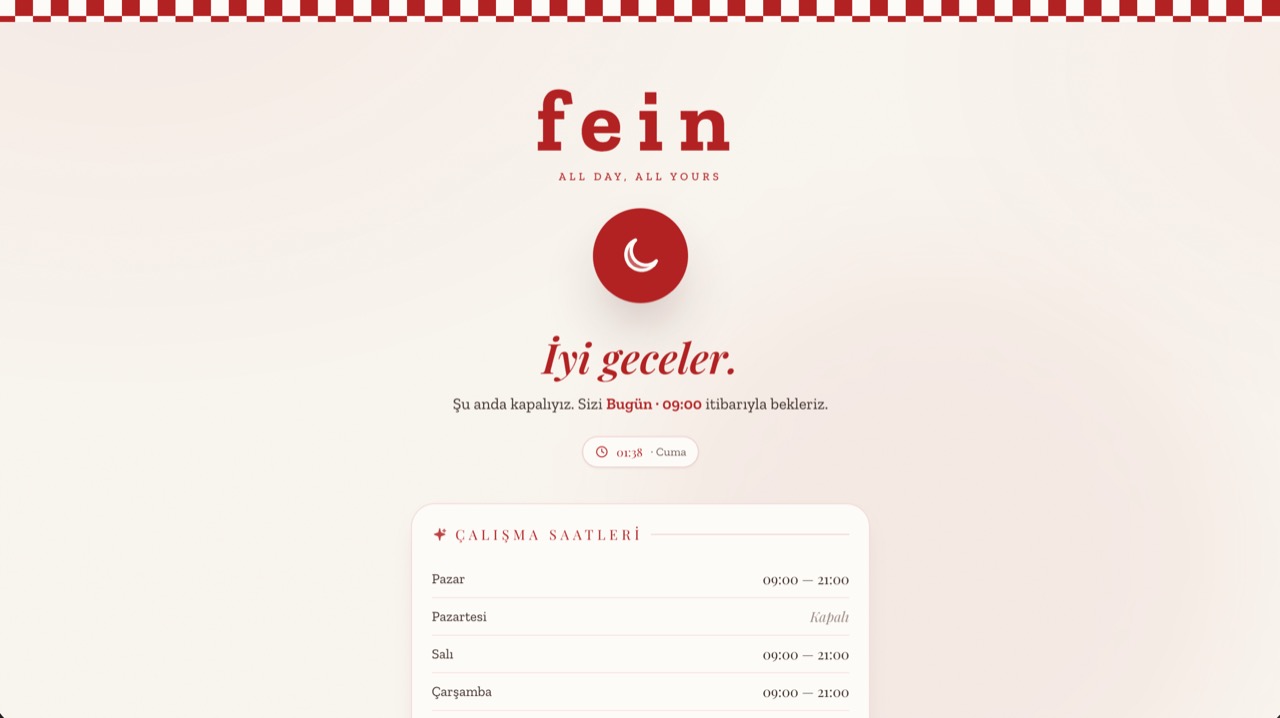
Almost any business process can become a web application. I have built work-order systems for service workshops, lesson and boarding management for riding clubs, a multi-tenant QR menu platform for restaurants, and a realtime social map running on self-hosted infrastructure. The common thread: structured data, clear roles, and interfaces that people actually use every day without training.
- →Work-order and service management systems
- →Booking, scheduling and appointment tools
- →Inventory, order and payment tracking
- →CRM-like customer and member management
- →Multi-tenant SaaS with per-tenant theming and data isolation
- →Realtime dashboards and live data views
Technology stack
I build on Nuxt and Vue for the interface, Node.js for APIs, and PostgreSQL — usually through Supabase — for data, auth, and realtime channels. Everything ships in Docker containers, either to managed cloud or to production servers I operate myself. This stack is deliberately boring in the best sense: mature, well-documented, fast, and cheap to run. It also means one person can genuinely own the whole system, which keeps communication overhead near zero and iteration speed high.
How the process works
We start with your actual workflow, not a feature list. I map the data model first — what entities exist, who touches them, what states they move through — because a correct schema makes everything downstream simpler. Then I build a working core quickly and put it in your hands early; real usage reshapes a product far better than any specification document. From there we iterate in short cycles: ship, use, adjust. When the product is stable, I handle deployment, backups, and monitoring so it keeps running without you thinking about it.
Why one developer instead of an agency
A SaaS product is not a website project that ends at launch — it is a living system that needs someone who understands every layer of it. When the same person designed the schema, wrote the API, and built the UI, there is no hand-off loss, no "that's the backend team's problem", and changes that would take an agency a sprint take an afternoon. I also run my own server fleet, so hosting, deployment, and maintenance are part of the same conversation instead of a separate vendor relationship.
Related Projects

Frequently Asked Questions
+How long does it take to build a SaaS product?
It depends entirely on scope, but my approach is to get a usable core into your hands in weeks, not months. A focused single-purpose tool can be live quickly; a multi-tenant product with billing, roles, and reporting grows in planned stages from that core.
+Can the same system have a website, mobile app and admin panel?
Yes — and this is one of the strengths of the stack I use. One database and one API can serve a public website, an installable app-like experience for phones, and an admin panel for your team. Fein QR Menu works exactly this way: a restaurant-facing editor and a customer-facing app on the same backend.
+Who owns the code and the data?
You do. The codebase is delivered to your repository, and your data lives in a PostgreSQL database you can export at any time. If we part ways, you take a complete, documented system with you — no lock-in to me or to a proprietary platform.
+Can you build multi-tenant SaaS where each customer has isolated data?
Yes. Multi-tenancy is a core pattern in my work — per-tenant data isolation at the database level, per-tenant theming and configuration, and role-based access within each tenant. It is designed in from the first schema, not bolted on later.
+Where will the product be hosted?
Wherever fits the project: managed cloud like Vercel, or Dockerized deployment on production servers I operate and maintain myself. Self-hosting often wins on cost and control for data-heavy products; I run several of my own products this way, including self-hosted Supabase.
+What happens after launch — do you provide maintenance?
Yes. A SaaS product needs monitoring, backups, dependency updates, and ongoing feature work. I offer maintenance arrangements where I keep operating the system I built — which is usually the most efficient setup, since I know every line of it.