Technical SEO & Performance
Some sites look perfectly fine and still don't rank — or lose visitors before the page even paints. I do the engineering side of SEO: structured data, multilingual architecture, crawlability, and Core Web Vitals, applied to the site you already have. No redesign required; the work happens under the hood.
Who this is for
This work is for sites that already exist and underperform: a corporate site an agency built beautifully but search engines can barely read, a catalog whose thousands of products never appear in results, a bilingual site where Google serves the Turkish page to English visitors. It is also for sites that simply feel slow — where the numbers in Search Console and the field data confirm what users already sense. If your site looks fine but doesn't rank, or ranks but loads slowly, this is the engagement for it.
What technical SEO covers
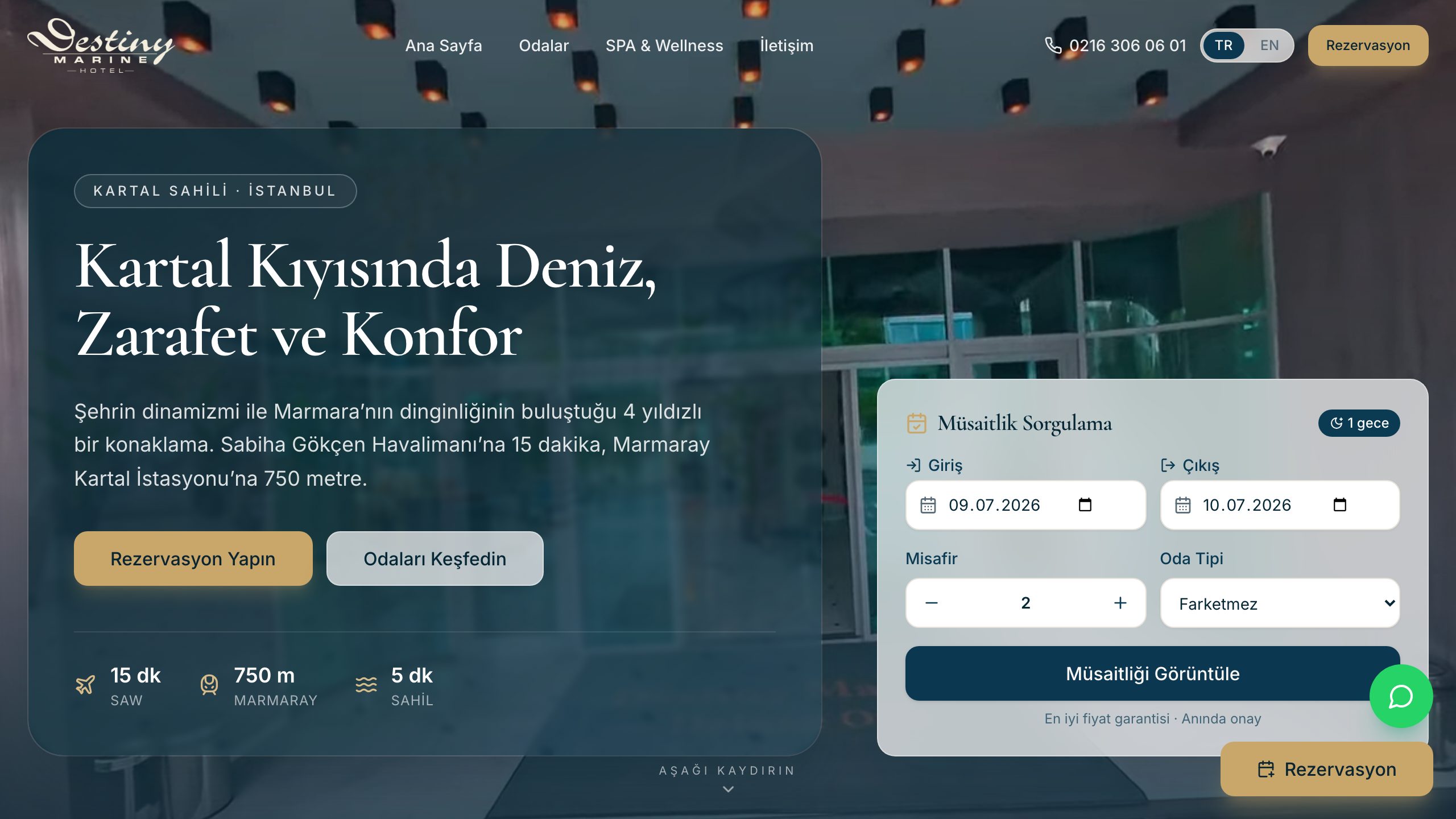
Technical SEO is everything search engines need to understand and trust your site, independent of the copy on the page. I add structured data (JSON-LD) so your products, business, and pages are machine-readable; fix hreflang and multilingual architecture so each language ranks in its own market; and clean up sitemaps, canonicals, redirects, and crawl paths so nothing is wasted or duplicated. I build my own bilingual sites this way — Destiny Marine Hotel and the Eda Müftüoğlu law office both run TR/EN hreflang structures — so this is daily practice, not a checklist.
- →Structured data (JSON-LD): organization, products, services, FAQs
- →hreflang & multilingual architecture for TR/EN sites
- →Sitemaps, canonicals, redirects, and crawl-budget cleanup
- →Indexing diagnostics via Search Console
Core Web Vitals & real speed work
Speed work is engineering, not a plugin. I optimize images with modern formats, correct sizing, and lazy loading; subset and preload fonts so text doesn't flash or shift; and cut JavaScript weight through bundle analysis and route-level code splitting, so each page loads only what it uses. Layout shift, render-blocking resources, and slow server responses each get diagnosed at the source. The targets are the Core Web Vitals — LCP, INP, CLS — measured on real field data, not just lab runs.
How an engagement works: audit → fixes → measurement
First, an audit: I crawl the site, read Search Console and field data, and produce a concrete, prioritized list of issues — each with its expected impact and effort, in plain language. Then the fixes: I implement them myself in the codebase, starting with the highest-leverage items, in small deployable batches rather than one risky big-bang change. Finally, measurement: we watch indexing, rankings, and vitals over the following weeks and document what moved. You end up with a faster site and a record of exactly what was changed and why.
Why performance is a ranking and conversion factor
Google uses page experience signals, including Core Web Vitals, as part of ranking — a slow site competes with a handicap. But the bigger cost is human: visitors abandon pages that hesitate, and every extra second of load time bleeds a share of them before your content gets a chance. Speed also compounds with crawling — faster pages let search engines index more of your site with the same budget. That is why I treat performance as part of SEO rather than a separate line item: the same work pays twice, once in rankings and once in visitors who stay.
Related Projects



Frequently Asked Questions
+Can you improve my site's SEO and speed?
In most cases, yes — existing sites almost always carry technical debt that holds them back: missing structured data, broken hreflang, oversized JavaScript, unoptimized images. The audit tells us exactly how much headroom your site has before you commit to the fixes.
+How long until I see results?
Honestly: it varies, and anyone promising a fixed timeline is guessing. Speed improvements are visible immediately after deploy. Search results take longer — engines need time to recrawl and re-evaluate, typically weeks to a few months depending on your site's size and competition. I set up measurement so progress is visible along the way instead of a surprise at the end.
+Do you guarantee first-page rankings?
No — and you should be wary of anyone who does, because nobody controls Google. What I can guarantee is the engineering: valid structured data, correct multilingual architecture, clean indexing, and measurably faster pages. Those are the levers a site owner actually controls, and they are what rankings are built on.
+Can you handle bilingual Turkish/English SEO?
Yes — it is a specialty. I build and fix hreflang architectures so the Turkish pages rank for Turkish searches and the English pages for English ones, without competing against each other. This very site runs that structure, as do the bilingual client sites in my portfolio.
+Can you fix my existing site without a redesign?
Yes — most technical SEO and performance work happens under the hood: markup, metadata, server configuration, image pipelines, and JavaScript weight. Your design and content stay as they are. If the design itself is causing problems (say, a heavy hero video hurting LCP), I'll flag it and propose the lightest possible change.
+What are Core Web Vitals, in plain terms?
Three measurements Google takes from real visitors: LCP — how quickly the main content appears; INP — how fast the page reacts when someone taps or clicks; CLS — how much the layout jumps around while loading. They matter because Google uses them in ranking and because they describe exactly what makes a site feel fast or frustrating.