Taking new projects
Service
Full-Stack Software Development in Istanbul
MT Yazılım is a full-stack software team based in İstanbul, building complete products: database schema, API, interface, and deployment — all in one hand. You get the direct line and speed of working with a freelance developer, with the continuity of a company behind it. Our portfolio runs in production right now: an AI-assisted workshop management system, a management engine for riding clubs, a multi-tenant QR menu SaaS, and more, most of them on server infrastructure we operate ourselves.
(01)
What full-stack means here
It means there is no gap between the people who design your data model and the people who build your interface — they are the same team. When a decision in the schema affects the UI, or a UX need requires an API change, it is settled in one afternoon instead of across three meetings. For a business, that translates into faster iterations, fewer misunderstandings, and one accountable point of contact for the whole product.
(02)
What we build
Complete web applications and SaaS products, business management systems, internal tools, admin dashboards, and the APIs behind them. OstamAI runs a motorcycle service workshop end to end — work orders, customers, vehicles, AI assistance. Çiftliğim manages riding clubs: lessons, horses, boarding, payments. Fein QR Menu is a multi-tenant SaaS with a restaurant-facing CMS and a customer-facing app. Different domains, same pattern: real operations moved into reliable software.
- 01SaaS products — multi-tenant, realtime where needed
- 02Business management systems and internal tools
- 03Admin dashboards and reporting screens
- 04REST APIs and integrations between existing systems
- 05AI features layered onto real workflows
(03)
The stack, without buzzwords
Frontend: Nuxt 3/4 and Vue 3 with TypeScript and Tailwind. Backend: Node.js with Supabase or plain PostgreSQL, depending on what the product needs. Infrastructure: Docker everywhere — we run our own fleet of production servers with reverse proxies, self-hosted Supabase, monitoring, and backups, and we also deploy to Vercel when a managed platform fits better. We only list technologies we ship with daily; every project in our portfolio runs on this exact stack.
(04)
Your own infrastructure, if you want it
Most freelancers and agencies hand you a codebase and a hosting bill. We can also hand you a running system: your product deployed on Docker infrastructure we operate and maintain — updates, monitoring, and backups included — or set up in your own cloud environment with everything documented. Multiple self-hosted applications currently run on our production servers, so the operational side is not theory to us.
(05)
How a product gets built
Discover, structure, design, build, launch, improve. We start by mapping the real workflow — who does what, where time is lost, what must never break. Structure turns that into a data model and feature plan; design and build follow in short cycles you can react to, not a months-long silence. Launch happens early with a usable core, and the product grows from real usage. That is how every system in our portfolio reached production.
Our work in this area
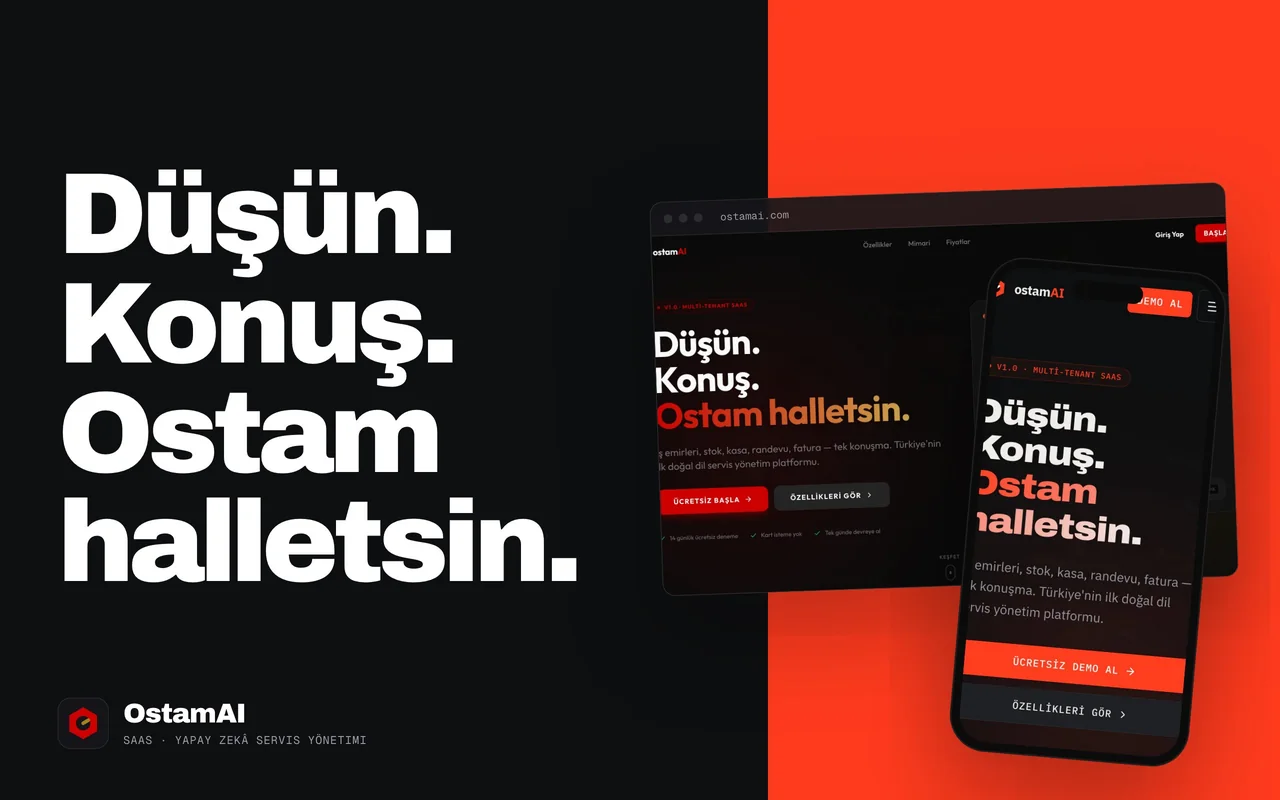
OstamAI
SaaS · AI Service Management
AI-powered motorcycle service management — work orders, customers, and AI-assisted operations.
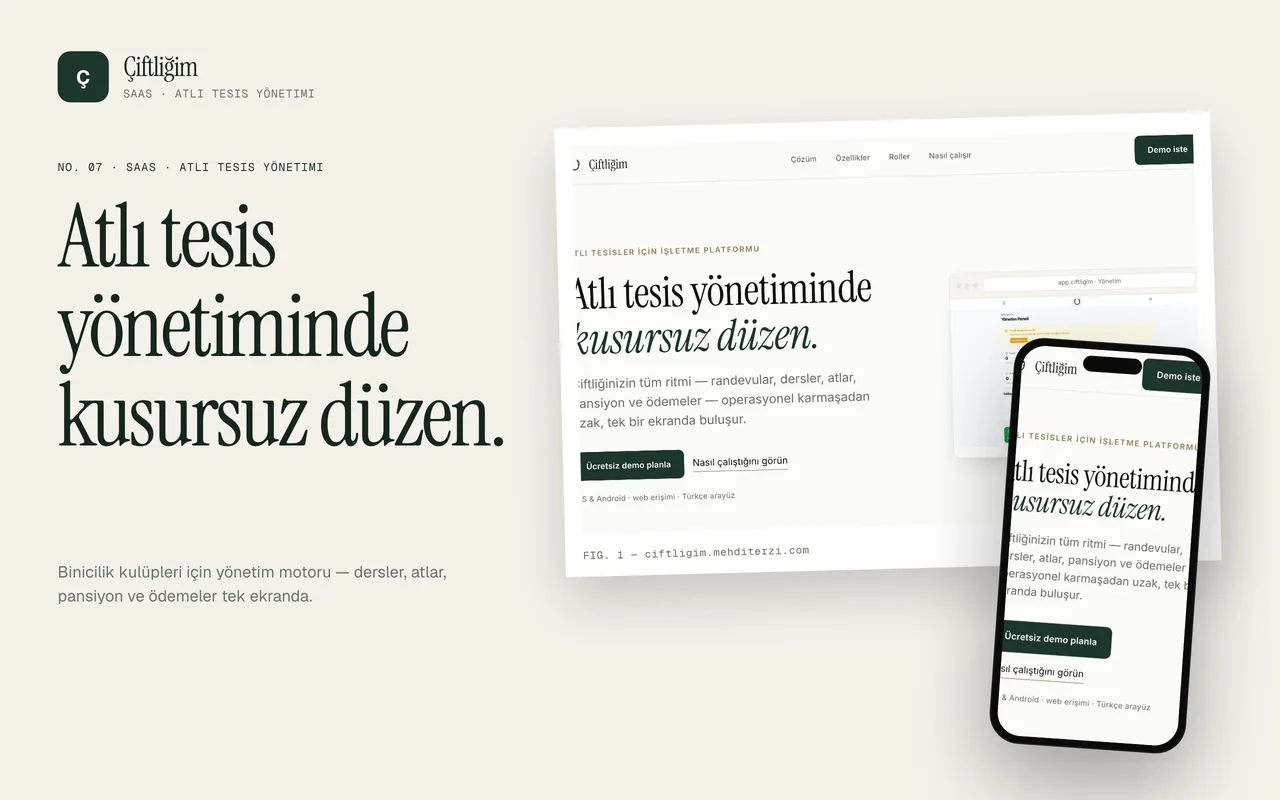
Çiftliğim
SaaS · Equestrian Management
Management engine for riding clubs — lessons, horses, boarding, and payments in one screen.
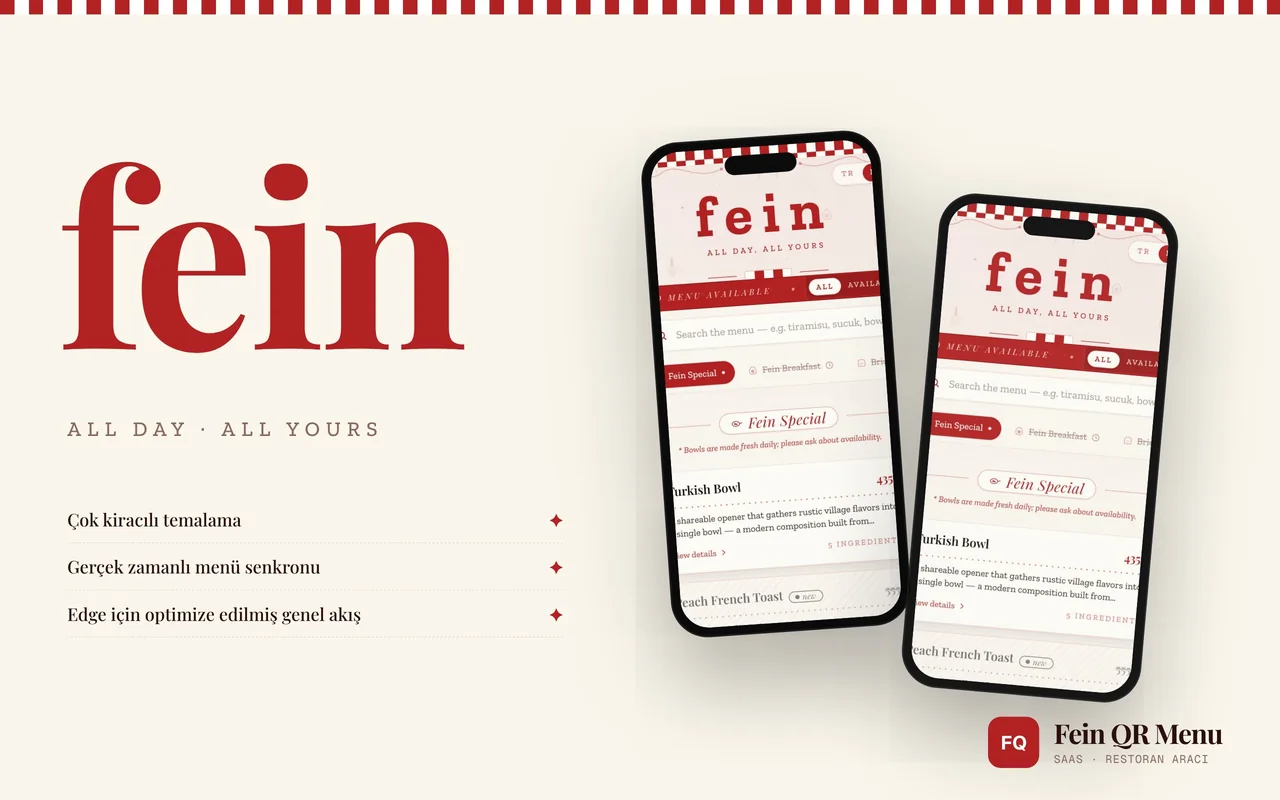
Fein QR Menu
SaaS · Restaurant Tooling
QR-based digital menu SaaS — multi-tenant, editor + customer-facing app.
FAQ
Frequently asked questions
Can you take over an existing codebase?
Yes, if it is in or near our stack — Vue/Nuxt frontends, Node backends, PostgreSQL/Supabase data layers. We start with a code and infrastructure review, stabilize what is fragile, and then continue development with a clear plan.
How long does an MVP take?
A focused first version — the core workflow, working end to end — typically takes 4–10 weeks depending on scope. We push hard to launch with a small, genuinely usable core rather than a long feature list, because real usage teaches more than planning.
Who owns the code?
You do. Projects live in repositories you have access to from day one, and everything needed to run the system — code, configuration, deployment setup — is handed over and documented.
Do you work alongside in-house teams?
Yes. Sometimes we build the whole product; sometimes we own a slice — the frontend, an API, the infrastructure — inside a larger team. Clear interfaces and honest estimates keep that collaboration smooth.
Where will the application be hosted?
Wherever fits: Docker servers we operate with monitoring and backups included, your own cloud account, or Vercel for frontends. We recommend an option based on your data, budget, and compliance needs, and set it up either way.
What about maintenance after delivery?
Software that runs a business cannot be abandoned at delivery. We offer ongoing arrangements covering updates, monitoring, backups, and small improvements — the same way we maintain our own products in production.
Related services
Have a similar project in mind?
You do not need a full brief. Send the idea as it is and we will help define the scope.