E-commerce & Catalog Websites
I build e-commerce and product catalog websites that stay fast when the product count reaches the thousands. Filterable category pages, product pages structured for search engines, and an admin side your team can actually use — designed and developed end to end, without forcing your business into a rigid platform.
For stores and for catalogs
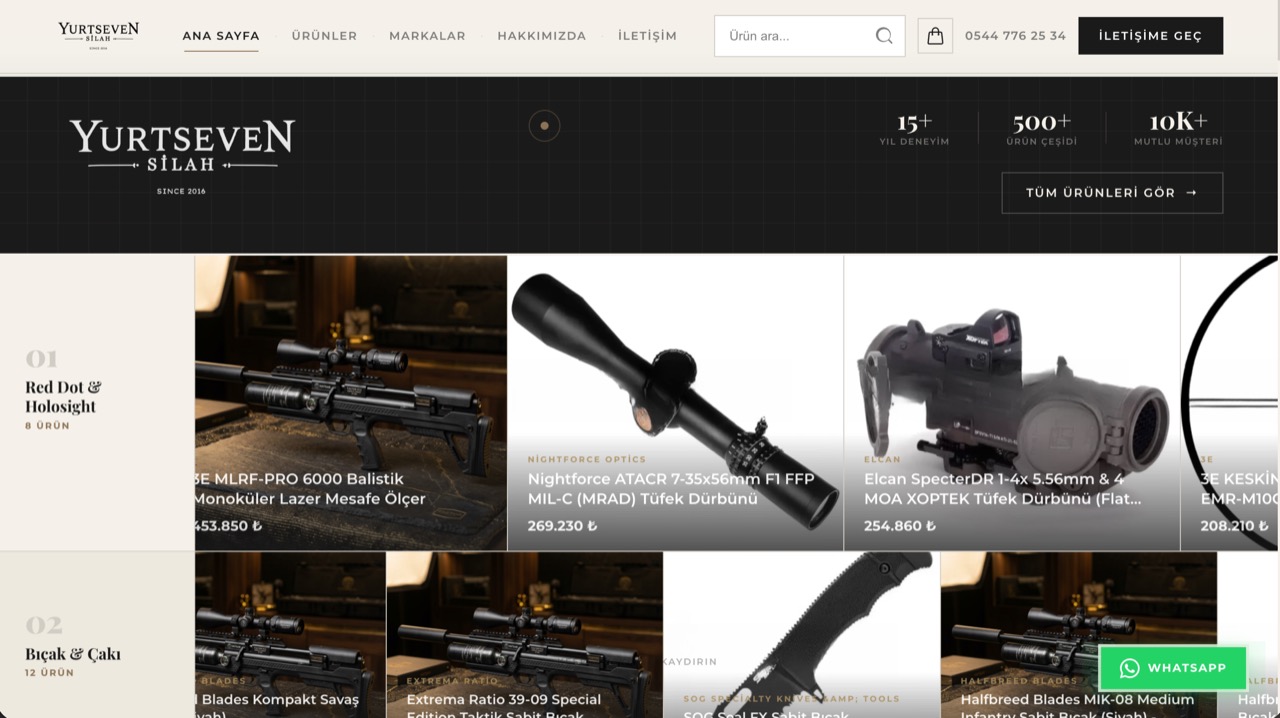
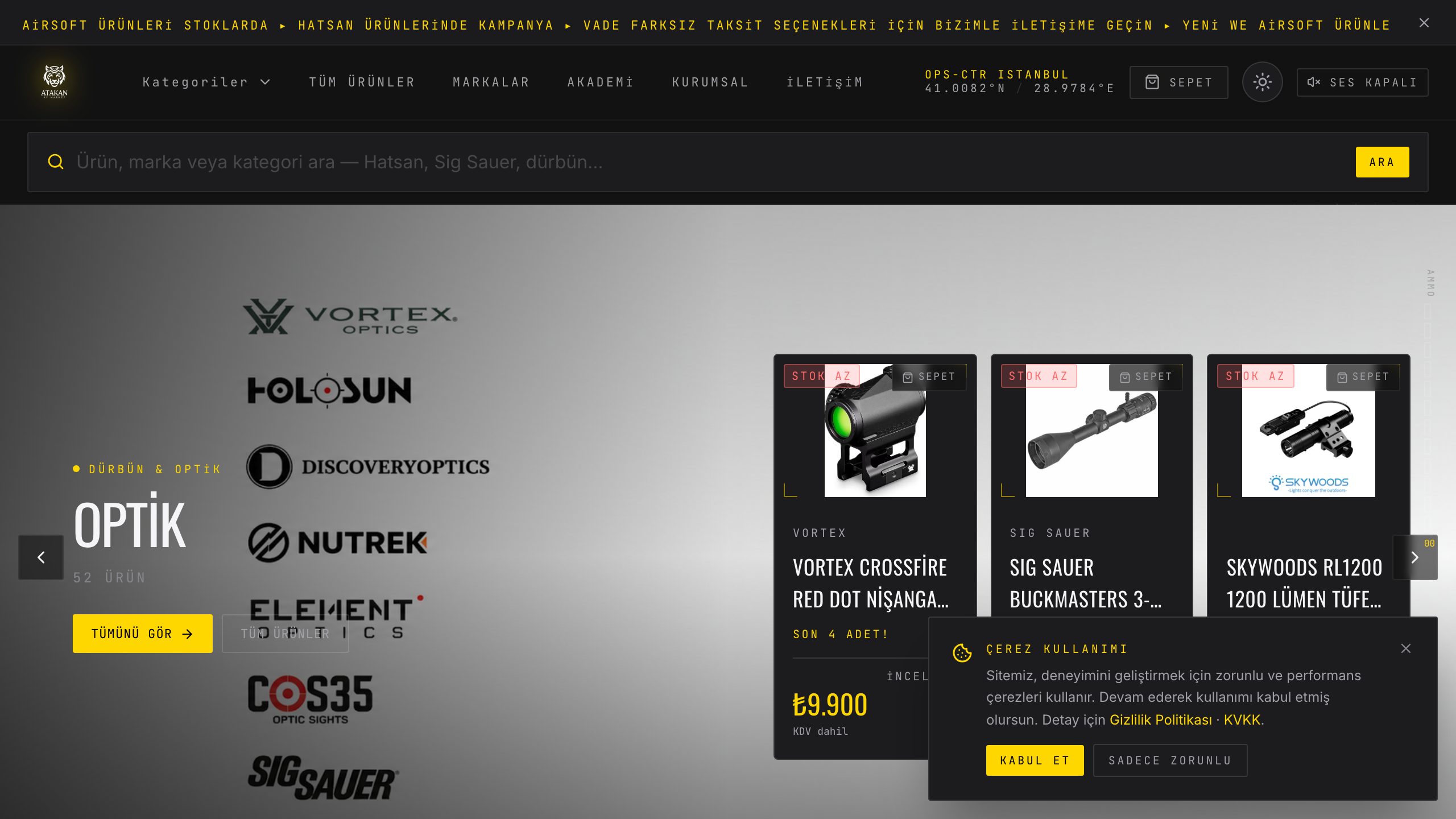
Not every product business needs a checkout. Some of my clients sell online with full cart and payment flows; others — like regulated retailers or B2B suppliers — need a rich, searchable catalog that drives phone calls and store visits instead. I build both. The Yurtseven Silah and Atakan Av Market catalogs in my portfolio handle thousands of SKUs with fast filtering, and the motorcycle retail sites pair product depth with a strong brand experience.
What gets built
The visitor-facing side covers category pages with instant filters, product pages with galleries and specifications, comparison flows, and search. Behind it sits a management layer for products, prices, stock, and campaigns. When online payment is part of the picture, I integrate Turkish and international payment providers, order flows, and shipping status. Everything is planned around how your team actually works, not around what a platform happens to offer.
- →Filterable category pages that respond in milliseconds
- →Product pages with structured data (schema.org) for rich results
- →Cart, checkout, and payment provider integration when needed
- →Product comparison and quick-view flows
- →Admin panel for products, stock, prices, and campaigns
Fast at 10 products, fast at 10,000
Most store platforms feel fine in a demo and crawl once the real catalog arrives. I design for the full catalog from day one: server-side rendering with Nuxt 3/4, lazy-loaded image grids, and filter logic tuned so category browsing feels instant. The data layer runs on PostgreSQL or Supabase behind a Node API, which means filtering and search are database problems solved properly — not plugins stacked on top of each other.
Products that show up on Google
An online store lives or dies by whether its product and category pages rank. I structure every product page with schema.org product data so prices and availability can appear directly in search results, build clean crawlable category URLs, and generate sitemaps that keep Google in sync with your stock. Category pages get real descriptive content, because a grid of images with no text ranks for nothing.
From first call to first order
The project follows my usual path — discover, structure, design, build, launch, improve — with extra weight on the structure phase: category tree, attribute and filter design, and data migration from your existing platform or spreadsheets. After launch we watch which categories convert, which filters get used, and where visitors drop off, then adjust. Hosting runs on Vercel or on Docker servers I maintain, sized for campaign-day traffic.
Related Projects

Frequently Asked Questions
+Which payment systems can you integrate?
Turkish providers such as iyzico and PayTR, and international ones like Stripe, depending on where your customers are. Installment options, 3D Secure, and refund flows are part of the integration, not an afterthought.
+Can we start with a catalog and add online sales later?
Yes, and it is often the right order. The catalog, product data, and SEO structure are built first; cart and payment are added on top later without rebuilding anything, because the data layer is designed for both from the start.
+We are on WooCommerce / a ready-made platform. Can you migrate us?
Yes. I export your products, categories, and images, restructure them for the new site, and set up redirects from every old URL so existing rankings and bookmarks keep working after the switch.
+How many products can the site handle?
The architecture is built for thousands of SKUs from the start — the catalogs in my portfolio run at that scale with fast filtering. Growth means adding data, not replatforming.
+Who manages products after launch?
Your team, through an admin panel built for your workflow — adding products, updating prices and stock, and running campaigns without touching code. I stay available for maintenance and new features.
+How long does an e-commerce site take?
A catalog site typically takes 4–8 weeks; adding full checkout and payment extends that, mostly depending on data readiness and integrations. The structure phase produces a concrete plan and timeline before development starts.
+Does the site work well on phones?
It is designed for phones first, because that is where most product browsing happens. Filters, galleries, and checkout are built and tested on mobile before anything else.