AI Integration Development
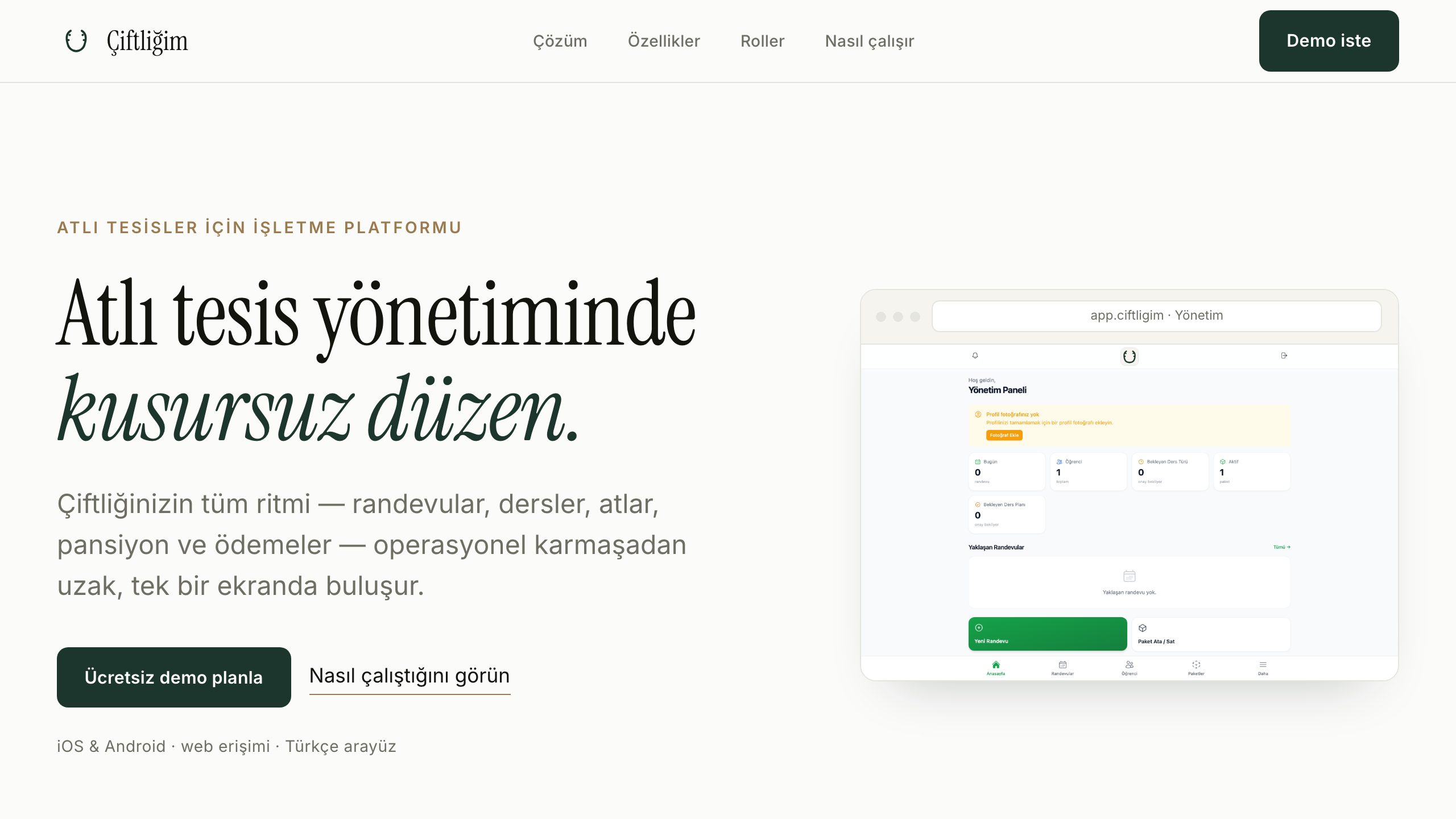
I integrate AI into real products — not demos. Assistants that operate on your business data, document and photo understanding, and automation that removes repetitive work from your team's day. I run this in my own products: OstamAI manages a motorcycle service workshop with AI assistance, and Garajım reads vehicle document dates straight from photos.
What AI can actually do inside your product
The useful version of AI is rarely a chatbot bolted onto a homepage. It is an assistant that knows your work orders, customers, and inventory and answers in that context. It is a camera flow that turns a photographed document into structured data — dates, amounts, plate numbers — without anyone typing. It is an automation that drafts the routine message, pre-fills the record, or flags the case that needs a human. I build these as features inside your existing product or as the core of a new one.
- →Assistants that answer from your own business data, not the open internet
- →Document & photo understanding (OCR) — invoices, registrations, forms
- →Workflow automation: drafting, classification, data entry, reminders
- →LLM API integration into Nuxt / Vue / Node products
Proof from my own products
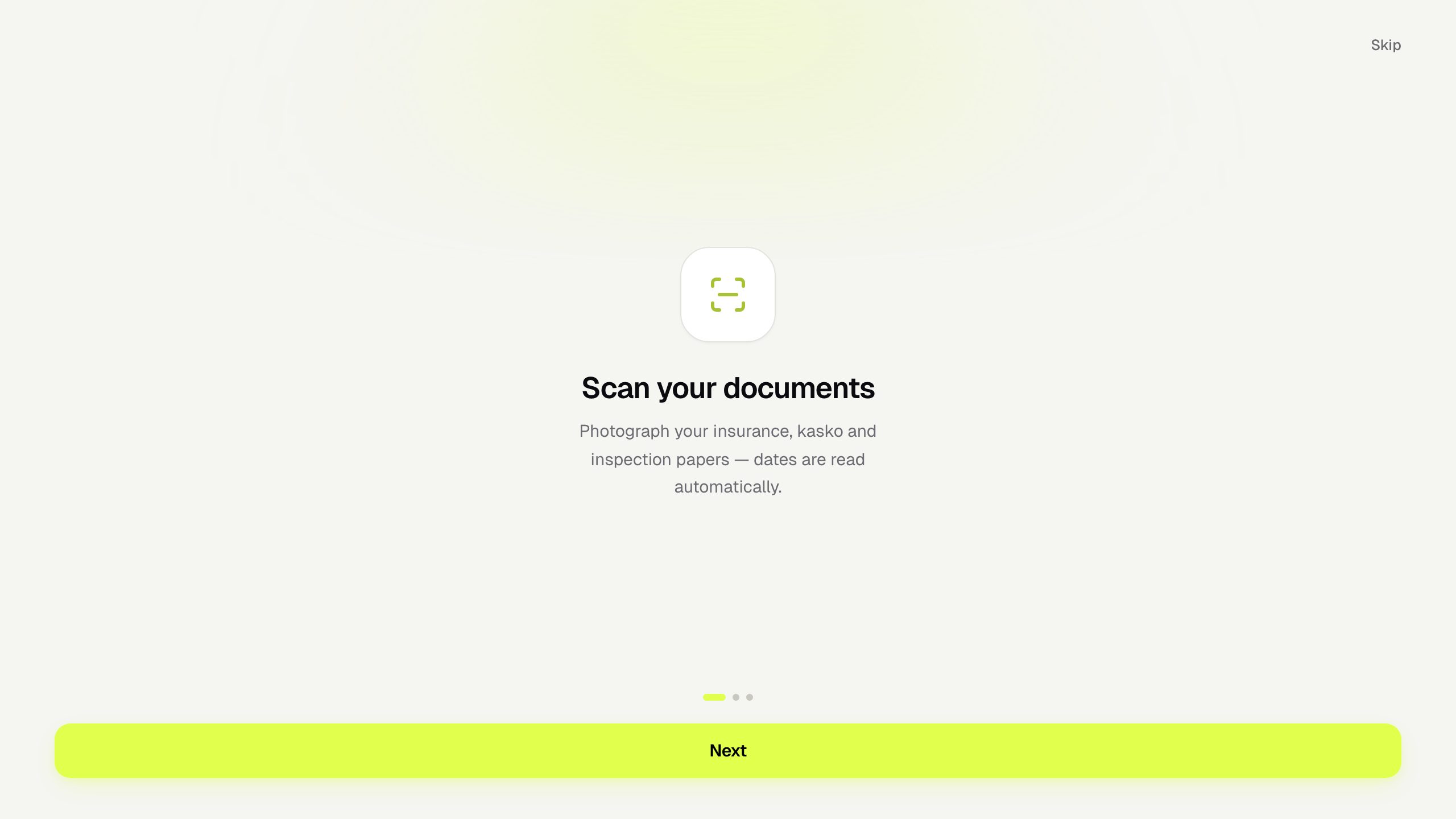
I don't sell AI I haven't operated myself. OstamAI is a full workshop management platform for motorcycle service shops — work orders, customer and vehicle records, service history — with AI assistance layered over daily operations, running in production as a self-hosted product. Garajım is built around one gesture: photograph an insurance, inspection, or maintenance document and the expiry date is extracted automatically, then tracked per vehicle with reminders. Both taught me where AI genuinely saves time and where it needs guardrails.
Technology, grounded in your data
The stack is deliberately boring where it should be: Nuxt or Vue on the front, Node.js APIs behind, PostgreSQL or Supabase for data, Docker for deployment — on managed cloud or on servers I operate. The AI layer talks to LLM APIs, and the critical part is grounding: the model only answers from the records, documents, and rules of your business, with retrieval and validation between the model and your users. OCR flows combine document processing with model-based extraction, then validate the output before it touches your database. Every AI feature ships with logging so we can see what it did and why.
How an AI project runs
We start by finding the task, not the technology: which repetitive, judgment-light work eats your team's hours? Then I prototype the narrowest useful version against your real data — a week or two, not a quarter — so we can see actual behavior before committing. If it holds up, I build it into the product properly: error handling, fallbacks for when the model is unsure, and a human-review path for anything consequential. After launch we measure usage and accuracy and tighten from there.
Honest limits — what AI won't do
AI features in my projects are scoped, tested, and grounded in your data — there is no magic. Models make mistakes, so anything that affects money, legal standing, or customer communication gets validation or a human in the loop. Some tasks simply aren't worth the model cost, and I will say so before you pay for them. If a plain database query or a well-designed form solves the problem, that is what I will recommend.
Related Projects

Frequently Asked Questions
+Can you build AI-powered features into my product?
Yes — that is the core of this work. Assistants over your business data, document/photo understanding, and workflow automation, integrated into Nuxt, Vue, or Node products. I run AI features in production in my own products, OstamAI and Garajım.
+What data do I need to provide?
Whatever the feature operates on: sample documents for OCR, a slice of your records for an assistant, real examples of the workflow you want automated. It doesn't need to be clean or complete — part of my job is structuring it. Realistic samples early prevent surprises later.
+Which models and APIs do you use?
I work with the major LLM APIs and choose per task — a small, fast model for classification and extraction, a stronger one for assistant-style reasoning. The integration is built so the model behind a feature can be swapped as the landscape changes, without rewriting the product.
+Is my business data kept private?
Your data stays in your database — PostgreSQL or Supabase, on managed cloud or on infrastructure I operate for you. Only the minimum needed for a given request is sent to the model API, and we choose providers whose terms don't use your data for training. Sensitive fields can be masked or kept out of prompts entirely.
+What does it cost to run AI features?
Honestly: it depends on usage, and it is an ongoing cost, not just a build cost. Model APIs charge per request, so a busy assistant costs more to run than a nightly document batch. I estimate the monthly API cost before we build, design features to use the cheapest model that does the job, and add caching so you don't pay twice for the same answer.
+Can AI be added to an app you didn't build?
Usually, yes — as long as the app exposes its data through an API or a database I can read. The AI layer can live as a separate service beside your existing system, which keeps the risk low: if we turn it off, your app keeps working exactly as before.